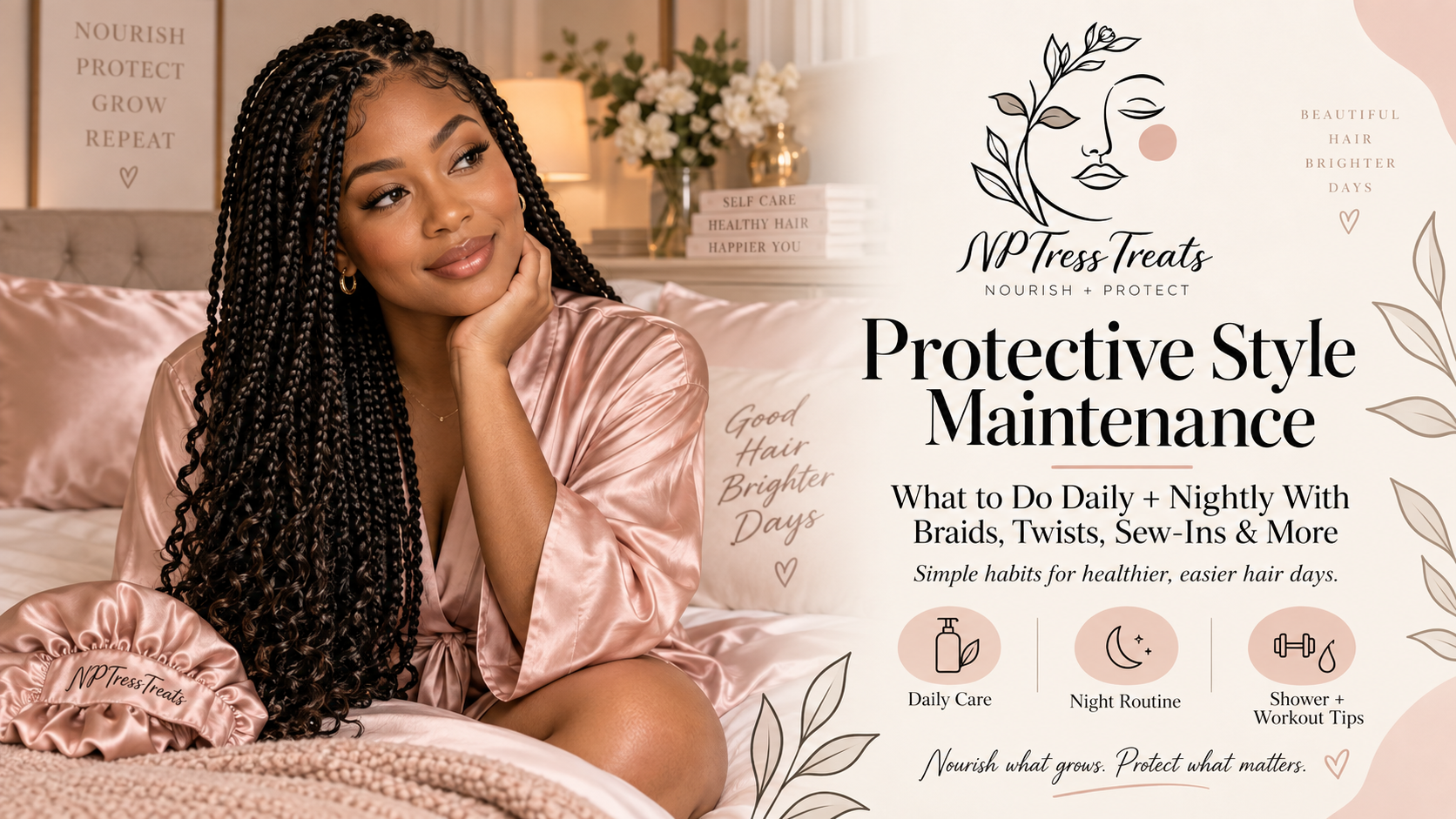
Protective styles are supposed to make life easier.
You spend the time getting your braids installed, twisting your hair, sitting through a sew-in or creating a style you want to enjoy for the next few weeks. Then a few days later, the questions start.
Should I be moisturizing every day?
How do I sleep without ruining it?
What do I do after the gym?
How do I keep my scalp clean?
How long is too long to keep a protective style in?
The truth is, getting the style is only the beginning.
A protective style can help reduce daily manipulation, but your natural hair and scalp still need attention while you're wearing it. The goal is to keep your style looking good without forgetting about the hair underneath it.
Here’s how to create a simple protective-style maintenance routine for braids, twists, sew-ins, extensions and more.
First: What Makes a Style “Protective”?
A protective style generally keeps your hair tucked away or reduces the amount of daily manipulation your natural hair experiences.
That may include:
But here's the important part:
A style isn't truly protecting your hair if it is creating excessive tension, dryness, matting or neglect underneath.
Protective styling should make caring for your hair simpler — not give you permission to ignore it completely.
Your Daily Protective Style Routine
You do not need a long routine every morning.
In fact, when you're wearing a protective style, less manipulation is often the point.
A few quick checks can help you stay on top of your hair and scalp.
1. Check Your Scalp
Before reaching for another product, pay attention to how your scalp actually feels.
Ask yourself:
Your scalp does not automatically need oil every day.
Sometimes what feels like dryness is actually product buildup, sweat or irritation from the style itself.
Paying attention first can help you avoid repeatedly layering products that your hair may not need.
2. Moisturize As Needed
Your hair doesn't stop needing care simply because it is tucked away.
Depending on your hair, style and products, you may want to lightly moisturize exposed natural hair or the hair within your braids or twists.
The key word is lightly.
Protective-style maintenance doesn't have to mean soaking your hair in product every day.
Think:
Moisture when needed. Product with intention.
Not:
More product because it's Tuesday.
3. Be Gentle With Your Edges
Your edges are often one of the most vulnerable areas during protective styling.
Try to avoid constantly:
If your style is already tight, adding tight ponytails and buns on top of it can create even more pulling.
Your protective style should feel secure — not painful.
4. Keep Manipulation Minimal
One of the biggest benefits of protective styling is not having to constantly touch your hair.
So let the style do its job.
Instead of changing your ponytail, bun or updo multiple times a day, try to keep styling simple and gentle.
Sometimes the best maintenance technique is simply leaving your hair alone.
Your Nighttime Protective Style Routine
If there is one habit that can make maintaining a protective style easier, it is protecting your hair while you sleep.
You spend several hours every night moving against your bedding. That friction can contribute to frizz, tangling and disruption of your style.
A nighttime routine helps create a barrier between your hair and your pillow.
Step 1: Loosely Gather Long Hair
If you're wearing long braids, twists or extensions, loosely gather them before bed.
The goal is to keep them contained without creating tension.
Avoid pulling everything into a tight ponytail just to make it fit inside your bonnet.
Your hair should have room.
Step 2: Use Satin
Cover your style with a satin bonnet or satin scarf before bed.
Satin creates a smoother surface around your hair and can help reduce the friction associated with sleeping directly against other fabrics.
That can be especially helpful for maintaining:
Braids
Twists
Curls
Extensions
Edges
Smooth roots
Step 3: Give Your Edges Extra Attention
Depending on your style, you may prefer to wrap a satin scarf around your hairline before putting on your bonnet.
This can help keep the front of your style more secure while still allowing the rest of your hair to sit comfortably inside a roomy bonnet.
Think:
Scarf for the edges. Bonnet for the style.
Step 4: Add a Satin Pillowcase
Because sometimes your bonnet has its own nighttime plans. 😂
If you move around a lot while sleeping, your bonnet may occasionally come off.
A satin pillowcase gives you an extra layer of protection when that happens.
The combination of a satin scarf, satin bonnet and satin pillowcase can help make your nighttime routine feel almost effortless.
How to Maintain Braids
Braids are one of the most popular protective styles, but they still need maintenance.
During the Day
Keep your scalp comfortable and clean.
Moisturize your natural hair when needed and avoid continuously loading your scalp with heavy products.
Try not to pull your braids into tight ponytails every day, especially if your installation already feels snug.
At Night
Gather longer braids loosely and place them inside a roomy satin bonnet.
If you're trying to keep your roots or edges smooth, add a satin scarf first.
One of the easiest ways to encourage frizz is allowing braids to rub against bedding all night.
How to Maintain Twists
Twists can begin to frizz or unravel when they're manipulated frequently.
Try to separate any sections that begin tangling together gently rather than pulling them apart aggressively.
For longer twists, loosely pineapple or gather them before placing them inside your bonnet.
Shorter twists can usually be covered directly.
Flat twists may benefit from a satin scarf to help keep the style smooth.
How to Maintain Sew-Ins + Extensions
One of the easiest mistakes to make with a sew-in is forgetting about the natural hair underneath it.
Your install may look amazing, but your scalp still needs attention.
Focus on:
Keeping your scalp clean
Avoiding aggressive scratching
Caring for your leave-out
Limiting excessive heat
Allowing the hair underneath to dry properly after washing
At night, gently detangle your extensions if needed, loosely secure them and cover the style with satin.
What About Wigs and Crochet Styles?
The same basic rule applies:
The hair you can't see still matters.
With wigs, pay attention to your braided foundation and hairline.
Avoid excessive tension from wig bands, clips and combs.
With crochet styles, keep your scalp accessible enough to cleanse and care for it as needed.
Protect the style at night to reduce unnecessary tangling and friction.
Protective Styles + Showering
You've finally gotten your style exactly how you want it.
Then comes shower steam.
Humidity and water can quickly create frizz, especially around the roots and hairline.
Before getting into the shower:
Secure long hair gently.
Place the entire style inside a roomy shower bonnet.
Make sure the hairline is covered.
Avoid allowing wet hair to stay trapped underneath the bonnet afterward.
For larger styles, braids and extensions, a generously sized shower bonnet makes a huge difference.
You shouldn't have to choose between taking a shower and protecting your hairstyle.
Protective Styles + Working Out
You can absolutely work out while wearing a protective style.
The important part is what happens afterward.
If your scalp becomes heavily damp from sweat, give it an opportunity to breathe and dry rather than immediately covering it for hours.
Depending on how frequently you exercise, you may also need to cleanse or refresh your scalp more often.
Before your workout, keep your hair secure but avoid pulling your style unnecessarily tight.
Afterward:
Protective Style Mistakes to Avoid
Protective styles are convenient, but there are a few habits that can work against you.
Constant Product Layering
More oil doesn't automatically equal more moisture.
Repeatedly adding heavy products without cleansing can lead to buildup.
Excessive Tension
If a style is painfully tight, that isn't something you need to “get used to.”
Pay attention to discomfort around your scalp and hairline.
Aggressive Scratching
Itchy scalp?
Try to figure out why rather than digging underneath your style with your nails or another object.
Sleeping Without Protection
If you're trying to keep a style looking fresh for weeks, giving it eight hours of friction every night isn't helping.
Cover it.
Keeping Damp Hair Covered Too Long
Allow your hair and scalp to dry appropriately after washing, heavy sweating or getting the style wet.
Keeping the Style In Forever
A protective style isn't permanent.
At some point, your hair needs to come down, detangle, cleanse, condition and reset.
When Is It Time to Take Your Protective Style Down?
Sometimes we keep a style because it still looks decent from the outside.
But underneath may be telling a different story.
Consider taking your style down when you're dealing with:
Significant buildup
Persistent discomfort
Matting
Excessive tangling at the roots
Slipping extensions
Ongoing scalp irritation
A style that requires constant manipulation to look presentable
Difficulty properly caring for your hair underneath
Your hair doesn't have to “survive” a protective style for it to be considered successful.
The goal is to come out of the style with your hair cared for — not exhausted.
Keep Your Protective Style Routine Simple
You don't need a shelf full of products or a complicated 30-minute routine every night.
Start with the basics:
Cleanse when needed.
Moisturize when needed.
Avoid excessive tension.
Reduce unnecessary manipulation.
Protect your hair with satin at night.
Pay attention to your scalp.
That's it.
Protective styling should make your routine easier.
And your nighttime routine should help you wake up with less work to do.
Want the Quick Version? Save the Protective Style Maintenance Guide
If you're the type of person who doesn't want to reread an entire blog post every time you're wondering what to do with your braids, twists or sew-in, we made something for you.
The NPTressTreats Protective Style Maintenance Guide is a quick digital reference you can save directly to your phone.
Inside you'll find easy-to-follow tips for:
No searching through ten browser tabs.
No complicated routine.
Just the information you need when you need it.
CLICK HERE to ——> Grab the Protective Style Maintenance Guide from the NPTressTreats Digital Minis collection.
Small guide. Simple habits. Easier hair days.
Nourish what grows. Protect what matters.